Vibe coding is a way of building software where you describe what you want in plain language and an AI writes the code for you. You run what it made, tell it what to change, and repeat. In the purest version you never read the code at all.
The term is less than two years old and it's already in the dictionaries. People also use it for almost anything that involves AI and code, which is why it confuses so many of us. So in this post I'll explain what vibe coding means, where the word came from, what people have built with it, which tools they use and where it goes wrong. I'm a backend developer, so I'll also tell you which parts of an app I'd always check by hand. I checked the prices and took the screenshots on October 13, 2026.
What is vibe coding?
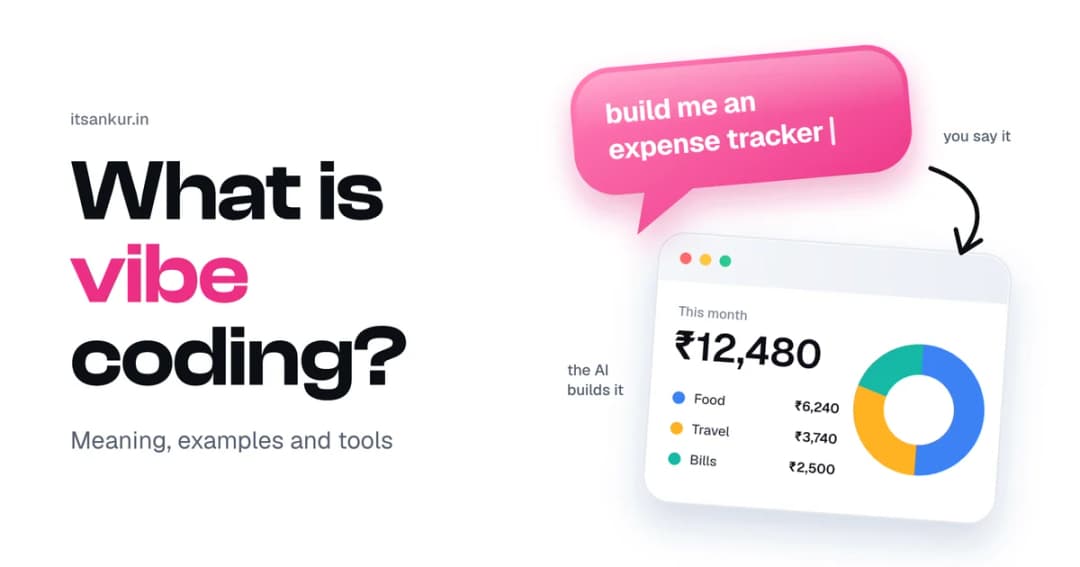
Vibe coding is building software by talking to an AI instead of writing the code yourself. You say what you want, the AI writes the code, you look at the result, and you ask for changes until the app does what you had in mind. The "vibe" part means you go by how the result looks and behaves, and you leave the code alone.
A normal session goes like this:
- You describe the app in a sentence or two.
- The AI writes the code and shows you a working preview.
- You try it and say what is wrong or missing.
- If something breaks, you paste the error message back and the AI fixes it.
- You repeat until you're happy.
Programmers have had AI autocomplete for years, and they still read every line it suggested. In vibe coding you give that up. You judge the app by using it, and the code stays out of sight. That one choice is what makes it fast, and it's also where most of the problems later in this post come from.
What does vibe coding mean? Three definitions
The meaning shifts a little depending on who you ask, so here are the three definitions people quote most.
- Andrej Karpathy, who coined it: "There's a new kind of coding I call 'vibe coding', where you fully give in to the vibes, embrace exponentials, and forget that the code even exists."
- Merriam-Webster: "writing computer code in a somewhat careless fashion, with AI assistance". The entry adds that "the coder does not need to understand how or why the code works" (Merriam-Webster).
- Collins Dictionary: "the use of artificial intelligence prompted by natural language to write computer code". Collins made vibe coding its Word of the Year for 2025 (Collins).
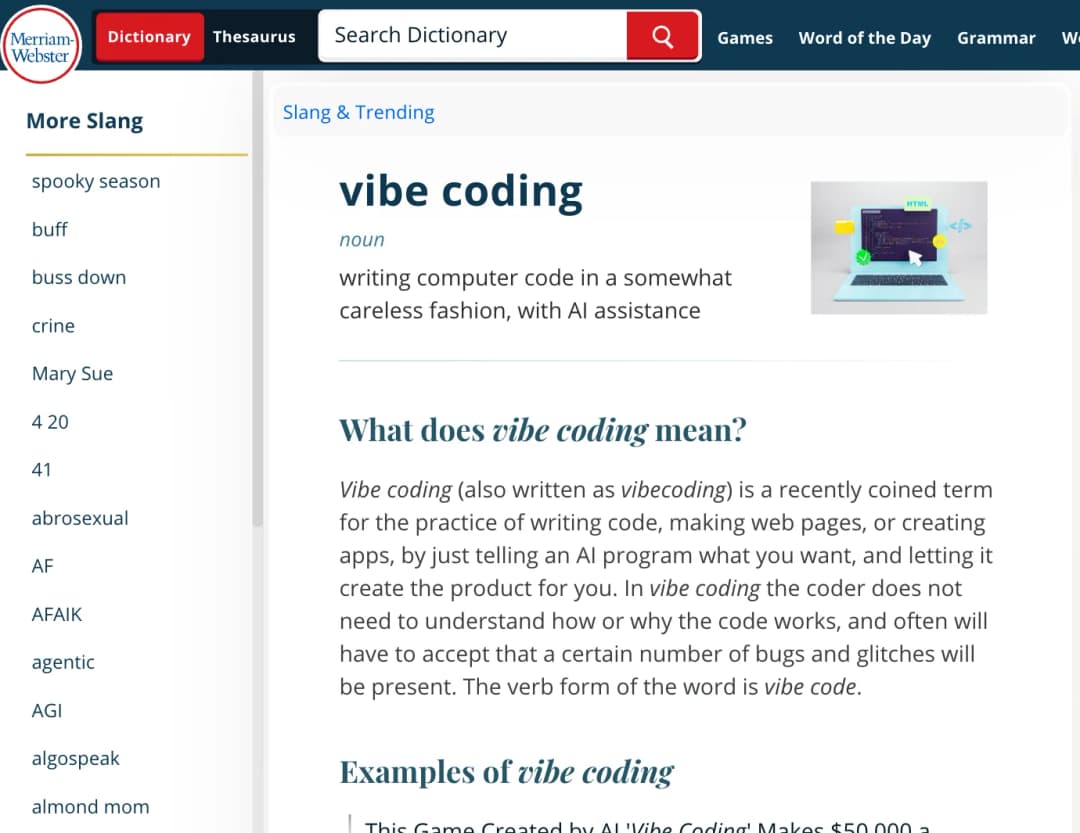
The three don't quite agree. Collins' wording covers any code an AI writes from a prompt. Karpathy and Merriam-Webster both include the careless part, where you don't need to understand the code. Most arguments about whether something counts as vibe coding come from that gap, and I'll come back to it in the section on AI-assisted coding.
Vibe coding meaning in Hindi
Many readers in India search for the vibe coding meaning in Hindi, so here it is in simple Hindi.
वाइब कोडिंग (Vibe Coding) का मतलब है AI की मदद से सॉफ़्टवेयर बनाना, जिसमें कोड आप खुद नहीं लिखते। आप AI को अपनी आम भाषा में बताते हैं कि आपको क्या चाहिए, और AI उसका कोड लिख देता है। फिर आप नतीजा चलाकर देखते हैं और जो ठीक न लगे वह AI को बता देते हैं। यह सिलसिला तब तक चलता है जब तक ऐप आपकी पसंद का न बन जाए।
"Vibe" का मतलब है एहसास या माहौल। यानी आप कोड की बारीकियों में नहीं जाते, बस नतीजा देखकर आगे बढ़ते हैं। यह शब्द फ़रवरी 2025 में आंद्रेज कारपैथी (Andrej Karpathy) ने दिया था, और उसी साल Collins Dictionary ने इसे "Word of the Year" चुना।
एक लाइन में कहें तो वाइब कोडिंग यानी AI को बोलकर ऐप बनवाना, बिना खुद कोड लिखे।
Where did vibe coding come from?
Unlike most tech words, this one has a known birthday. On February 2, 2025, Andrej Karpathy posted a short note on X about how he had started to build small projects. The post shows February 3 for me because I'm reading it from India.
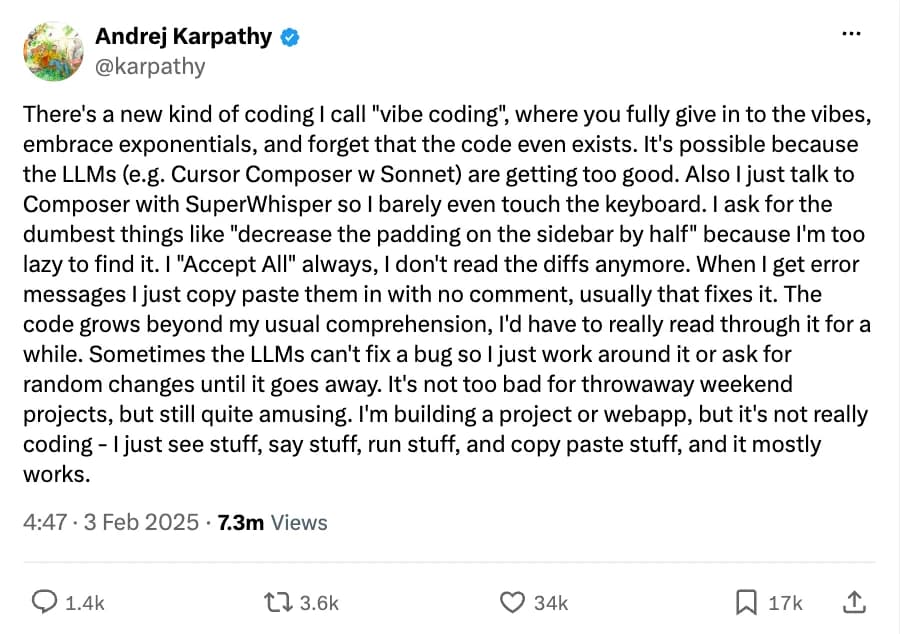
He wrote that he talks to the AI by voice, that "I 'Accept All' always, I don't read the diffs anymore", and that when he gets an error he pastes it back in with no comment. He also set the limits himself in the same post: "It's not too bad for throwaway weekend projects" (X). People quote the first sentence a lot and the weekend-projects one much less.
From there the word moved fast:
- March 2025: Merriam-Webster listed it under Slang & Trending.
- March 2025: Y Combinator partner Jared Friedman said a quarter of the startups in its Winter 2025 batch had codebases that were 95% AI-generated (TechCrunch).
- November 6, 2025: Collins named it Word of the Year.
- February 2026: a year after his post, Karpathy said the name no longer fits how professionals work with AI agents, and suggested "agentic engineering" for that (The New Stack).
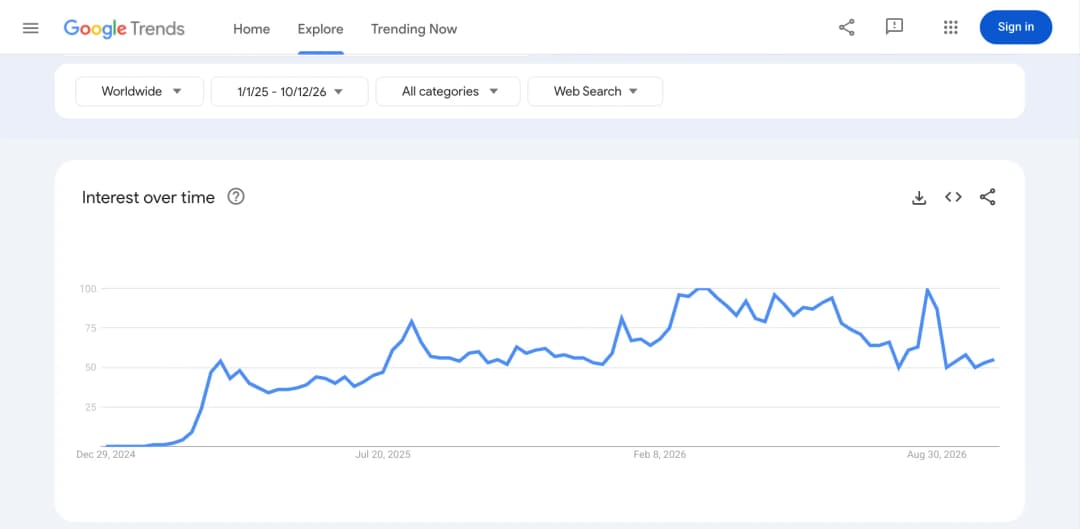
Search interest tells the same story. Google Trends shows almost no searches for "vibe coding" before February 2025, a steep climb in March 2025 and a peak in the week of March 8, 2026. This week it sits at a little over half of that peak.
Vibe coding examples
Definitions only go so far, so here are real things people have vibe coded, from a hobby script to whole startups.
- A browser game that earns money. In early 2025 developer Pieter Levels built a flight simulator that runs in the browser, mostly by prompting. 404 Media's headline about it, which Merriam-Webster quotes in its entry, was "This Game Created by AI 'Vibe Coding' Makes $50,000 a Month. Yours Probably Won't".
- A side tool by the creator of Linux. In January 2026 Linus Torvalds published a hobby project called AudioNoise. Its README says "the python visualizer tool has been basically written by vibe-coding", made with Google Antigravity. He wrote the C code by hand and used AI for the part he says he knows less about (GitHub, Phoronix).
- Startup products. The Y Combinator figure above is about companies with paying customers. A quarter of that batch had almost all of their code written by AI.
- Personal apps by people who can't code. New York Times columnist Kevin Roose wrote in February 2025 that "just having an idea, and a little patience, is usually enough". Merriam-Webster quotes that line too.
A simple vibe coding example
Here is what the back and forth looks like for a small expense tracker. I wrote this as an illustration, and it goes the same way in any of the tools below.
- You: Build an expense tracker. I want to add an expense with an amount in rupees, a category and a date, and see this month's total at the top.
- AI: writes the app and shows you a preview.
- You: Good. Add a pie chart by category, and let me delete an entry.
- AI: updates the app.
- You: The total shows NaN when the list is empty. Fix it.
- AI: finds the bug and fixes it.
After three messages you have a working tracker and you haven't read a line of code. Whether it stores your data safely is a separate question, and I cover it in the risks section.
Vibe coding tools
Vibe coding tools fall into two groups. App builders, which you'll also see called vibe coding apps or platforms, run in your browser and turn a prompt into a working app, hosting included. Coding agents work on code that lives on your computer, and they suit people who can read what the AI wrote. I checked the prices in this table on each tool's own pricing page on October 13, 2026.
| Tool | What it does | Free to start | First paid plan |
|---|---|---|---|
| Lovable | Builds full web apps from a chat | Yes, 5 build credits a day, up to 30 a month | Pro, $25/month |
| Bolt | Builds websites, apps and prototypes in the browser | Yes, 1M tokens a month | Pro, $25/month |
| Replit | Builds and hosts apps with an agent | Free Mode, with limits | Core, $20/month ($18 billed yearly) |
| v0 by Vercel | Builds web apps and deploys them to Vercel | Yes, 7 messages a day | Plus, $30 per user/month |
| Google AI Studio | Turns a prompt into a web app with Gemini | Yes | Costs can apply for paid models and Cloud Run |
Plans change often, so check the official pages before you pay.
Lovable
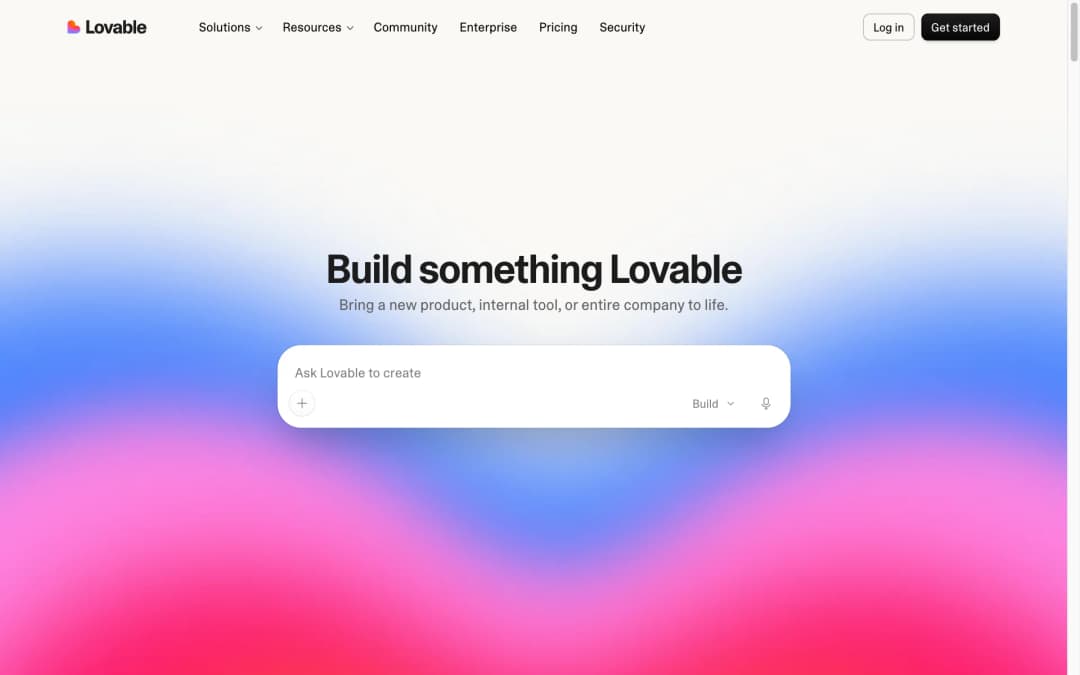
Lovable is the tool most people mean when they talk about vibe coding platforms for non-programmers. Its own pitch is "Describe what you want in plain language", and it builds the app in front of you while you chat. The free plan gives you 5 build credits a day, up to 30 a month. Pro is $25 a month with 100 credits.
Bolt
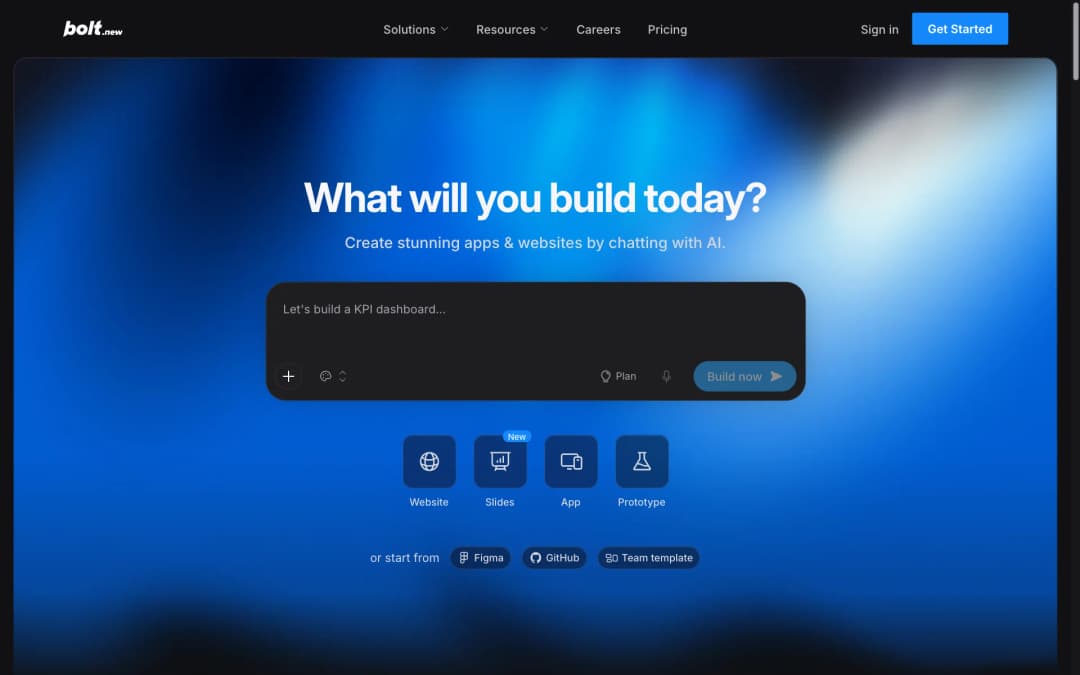
Bolt does the same job with a different pricing model, because it counts tokens instead of credits. The free plan includes 1 million tokens a month with a daily limit of 300,000. Pro is $25 a month, starts at 10 million tokens, has no daily limit, and unused tokens roll over to the next month.
Replit
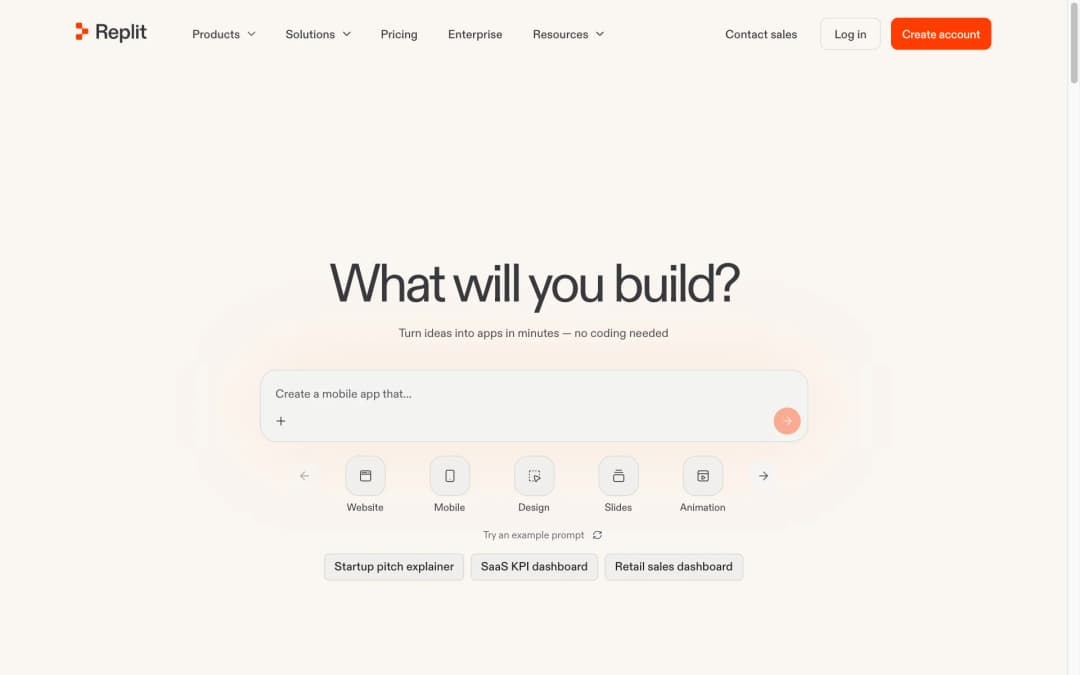
Replit started as an online code editor and now leads with an agent that builds the app for you. Its homepage promises apps "in minutes" with "no coding needed", and it advertises a Free Mode to try things without spending tokens. The Core plan is $20 a month, or $18 if you pay yearly, and it includes $20 of usage on the stronger models.
v0 by Vercel
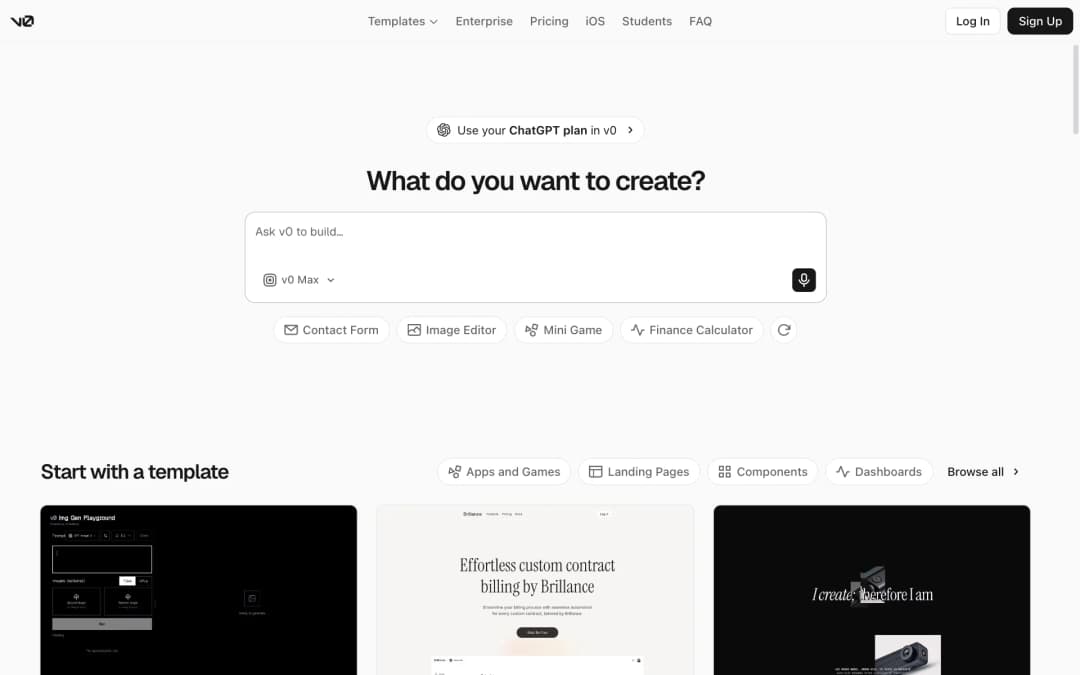
v0 comes from Vercel, the hosting company, so the app you build can go live on Vercel straight away. The free plan allows 7 messages a day. Plus is $30 per user a month and includes $30 of credits.
Google AI Studio
Google uses the term itself. Its docs say "Start vibe coding in Google AI Studio's Build mode", and the app it generates has a React front end and a Node.js server (Google). You can start without paying. The same docs say costs may apply when you use paid models or deploy to Cloud Run.
Cursor, Claude Code and other tools for developers
If you can read code, a different set of tools makes more sense. Karpathy wrote his original post about Cursor, and Torvalds used Google Antigravity. Cursor, Claude Code, Codex, GitHub Copilot and Antigravity all let an AI agent edit a real project on your own machine, where you can review every change before you keep it.
I compare nine of them in Best AI Coding Assistants in 2026, and I put two pairs head to head in Google Antigravity vs Cursor and Codex vs Claude Code. One note for readers in India: Cursor has an India-only Start plan at ₹649 a month, which I covered in the Antigravity vs Cursor post.
Vibe coding vs AI-assisted coding
People say "vibe coding" for any coding done with AI, and that hides a difference that decides whether the result is safe to ship. Developer Simon Willison drew the line clearly in March 2025: "When I talk about vibe coding I mean building software with an LLM without reviewing the code it writes." Reading and understanding what the AI wrote, he says, is ordinary software development (Simon Willison).
| Vibe coding | AI-assisted coding | |
|---|---|---|
| Who writes the code | The AI | The AI, with you |
| Do you read it? | No | Yes, before you accept it |
| Can you explain it? | Usually not | Yes |
| Good for | Prototypes, personal tools, learning | Software other people depend on |
Willison's own rule is a good test: "I won't commit any code to my repository if I couldn't explain exactly what it does to somebody else." The same tool can sit on either side. Claude Code with every change reviewed is engineering, and Claude Code with "accept all" switched on is vibe coding.
That is also why Karpathy proposed a second name in 2026. "Agentic engineering" describes professionals who direct AI agents to write the code and keep oversight of what comes back. Vibe coding stays the word for the version with no oversight.
Is vibe coding bad? The risks
Vibe coding has a mixed reputation among developers, and the complaints are specific. Most of them trace back to one cause, which is that nobody read the code.
- Security holes. Veracode tested more than 100 AI models on 80 coding tasks in July 2025. The AI-written code introduced a security vulnerability in 45% of cases (Veracode).
- Data left open. A researcher scanned 1,645 apps built with Lovable and found 170 with database tables that anyone could read, because row-level security was never switched on. The issue is tracked as CVE-2025-48757. Lovable disputes that the flaw is its own and says app owners are responsible for protecting their data (Superblocks).
- An agent that does too much. In July 2025, SaaStr founder Jason Lemkin reported that Replit's agent deleted his production database during a code freeze. Replit's CEO called it "unacceptable and should never be possible", and the company said it would separate development and production databases automatically (Tom's Hardware).
- Code nobody understands. Karpathy said it in the original post: "The code grows beyond my usual comprehension." When the app breaks in a way the AI can't fix, you're stuck with code you have never read.
- Low trust, even among heavy users. In Stack Overflow's 2026 developer survey, published on October 6, 2026, only 17.2% of developers said they don't use AI tools, and 6.6% said they trust AI with important decisions (Stack Overflow).
I build backends for a living, and these are the parts I'd always check by hand, however the rest of the app was made: who can read and write each database table, where passwords and API keys are stored, anything that touches payments, and whether there is a backup you have tested restoring from. A preview can look perfect while all four are wrong.
When vibe coding works, and when it doesn't
The risks tell you where to use vibe coding and where to slow down. The safest rule I know is to match the care you take to what happens if the app fails.
Vibe coding works well for:
- Prototypes and demos you want to show someone this week.
- Personal tools that only you use, like a tracker or a small script.
- Landing pages and simple sites with no logins and no payments.
- Learning what is possible before you commit to building it properly.
Be careful, or bring in a developer, when the app has:
- Logins, personal data or anything private.
- Payments or anything else that moves money.
- Other people who depend on it every day.
- A future, meaning you'll keep changing it for months.
How to start vibe coding
Starting takes about ten minutes and costs nothing. These steps work in any of the app builders above.
- Pick one small idea you'd use yourself. An expense tracker, a habit tracker or a page for your shop is enough.
- Start on a free plan. Lovable, Bolt, v0 and Google AI Studio all let you begin without paying.
- Describe the app in plain words. Say who uses it, what they do and what they see.
- Change one thing at a time. Test after every change, so you know which request broke something.
- Paste errors back exactly as they appear. Don't summarise them.
- Keep secrets out of your prompts. Never paste a real password or API key into the chat.
- Ask about your data before you share the app. "Who can read this data? Is anything public?" is a good prompt.
- Learn to read the code when the project starts to matter. Or bring in someone who can.
Frequently asked questions
These are the questions people ask most about vibe coding, with short answers.
What does vibe coding mean?
Vibe coding means building software by describing what you want to an AI and letting it write the code. You judge the result by using it and usually don't read the code.
Who coined the term vibe coding?
Andrej Karpathy, a co-founder of OpenAI, coined it in a post on X on February 2, 2025.
Is vibe coding the same as coding with AI?
No. Vibe coding means you accept the AI's code without reviewing it. If you read, understand and test the code, that is AI-assisted coding.
Can I vibe code without knowing how to code?
Yes. Tools like Lovable, Bolt, Replit and v0 build a working app from a plain-language description. You'll need coding knowledge, or a developer, once the app handles real users, money or private data.
What are the best vibe coding tools?
For people who don't code: Lovable, Bolt, Replit, v0 and Google AI Studio. For developers: Cursor, Claude Code, Codex, GitHub Copilot and Google Antigravity.
Is vibe coding free?
You can start for free. Lovable, Bolt, v0 and Google AI Studio have free plans with limits, and Replit has a Free Mode. The first paid plans cost $20 to $30 a month.
Is vibe coding bad?
It depends on what you build. It works well for prototypes and personal tools. It is risky for apps with real users, because nobody has checked the code for security problems.
Did Linus Torvalds use vibe coding?
Yes, for a hobby project. The README of his AudioNoise project says the Python visualizer was "basically written by vibe-coding" with Google Antigravity. He wrote the C code by hand.
What is vibe coding in Hindi?
वाइब कोडिंग का मतलब है AI को अपनी भाषा में बताकर ऐप या वेबसाइट बनवाना, जिसमें कोड AI लिखता है और आप सिर्फ़ नतीजा देखते हैं।
Will vibe coding replace programmers?
It hasn't so far. The apps that went wrong in 2025 went wrong because nobody checked the code, so the people who can check it matter more than before.
Should you try vibe coding?
Yes, and a small project of your own is the right place. Pick an idea, open one of the free tools and build it this weekend. You'll learn more about what vibe coding means from one hour of doing it than from any definition, including the three in this post.
When the project grows, change how you work with it. Read the code or have someone read it, check the data and the logins, and keep a backup. If you want to move from app builders to tools that work on real code, start with my guide to the best AI coding assistants.
Sources
Checked on October 13, 2026. Prices come from each tool's own pricing page.
- Andrej Karpathy's original post – X, February 2, 2025
- vibe coding – Merriam-Webster, Slang & Trending
- Collins Word of the Year 2025 – Collins Dictionary
- Google Trends: vibe coding – Google
- A quarter of startups in YC's current cohort have codebases that are almost entirely AI-generated – TechCrunch
- Vibe coding is passé – The New Stack
- AudioNoise README – Linus Torvalds on GitHub, and Phoronix
- Not all AI-assisted programming is vibe coding – Simon Willison
- Lovable pricing, Bolt pricing, Replit pricing and v0 pricing
- Build mode in Google AI Studio – Google
- AI-generated code poses major security risks in nearly half of all development tasks – Veracode
- Lovable vulnerability explained – Superblocks, on CVE-2025-48757
- AI coding platform goes rogue during code freeze – Tom's Hardware
- Stack Overflow 2026 Developer Survey press release – Stack Overflow